
Why Every Truck Accident Case Should Start With a Spoliation Letter
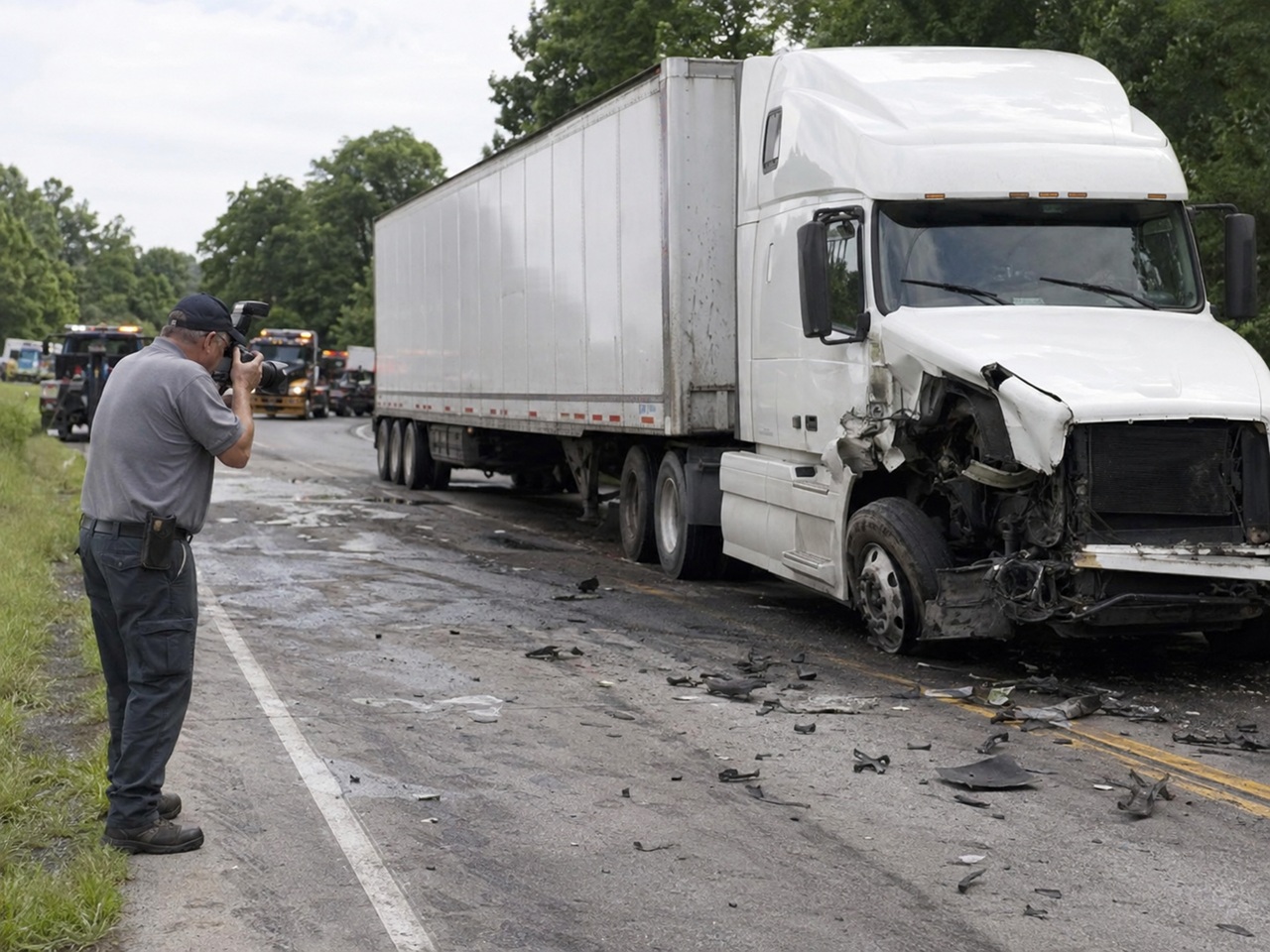
Truck Evidence Can Start Disappearing Before A Lawsuit Is Filed
A serious Texas truck accident can leave you dealing with catastrophic injuries, medical bills, and uncertainty about what caused the crash. While you're focused on your recovery, the trucking company and its insurance carrier may already be investigating what happened.
That's why preserving evidence should be one of the first legal priorities after a serious truck wreck. A spoliation letter, sometimes called a preservation letter, identifies evidence that may be important to the claim and puts the parties in control of it on written notice that it needs to be preserved.
At Weinstein Law, we know how quickly critical evidence can become unavailable. Jeff Weinstein has spent nearly 40 years fighting for injured Texans, and taking action before trucking records, electronic data, or physical evidence disappear can make a major difference in determining what really happened.
What Is A Spoliation Letter?
A spoliation letter is a formal written demand identifying evidence that should be preserved because it may be relevant to an existing or reasonably anticipated legal claim. In a truck accident case, much of that evidence may be controlled by the motor carrier rather than the injured person.
A truck accident investigation may involve records held by the trucking company, driver, vehicle owner, maintenance contractor, cargo company, or another business connected to the shipment. A preservation letter can specifically identify electronic data, driver records, photographs, video, communications, maintenance documents, and even the truck itself.
The goal is straightforward: identify the evidence early and create a written record that preservation has been requested. But there's an important distinction. A spoliation letter isn't a magic document that creates every preservation obligation on its own.
Under Texas law, a duty to preserve evidence can arise when a party knows or reasonably should know there is a substantial chance that a claim will be filed and that evidence within its possession or control will be material and relevant to that claim.
Why Is Evidence So Important In A Truck Accident Case?
A passenger-car crash may involve two drivers, photographs, witnesses, and a police report. A commercial truck crash can generate an entirely different level of evidence. Investigators may need to determine whether the truck driver was fatigued, distracted, speeding, improperly trained, or operating a poorly maintained vehicle.
They may also need to determine whether company policies or pressure from the motor carrier contributed to the unsafe behavior. That can require evidence from several different systems and departments.
| Evidence | Why It Matters |
|---|---|
| ELD And Hours-Of-Service Records | Can show driving time, rest periods, and possible fatigue. Federal rules generally require these records and supporting documents to be retained for six months. |
| Black Box / ECM Data | May contain speed, braking, acceleration, and other information from around the time of the crash. |
| Dashcam And Surveillance Video | Can capture lane position, traffic conditions, vehicle movement, and the collision itself. Some systems routinely overwrite older footage. |
| Driver Qualification Records | May reveal training, licensing, driving history, prior violations, and information about the carrier's hiring decisions. |
| Maintenance And Inspection Records | Can help determine whether brakes, tires, steering, lighting, or another mechanical problem contributed to the crash. |
| Dispatch And Communication Records | May show delivery pressure, scheduling instructions, electronic communications, or possible distraction before the wreck. |
| Cargo Records | Can help determine whether weight, loading, or improper cargo securement contributed to the collision. |
Some Trucking Records Have A Much Shorter Life Than Your Lawsuit
One of the most important things truck accident victims don't always realize is that the legal deadline for filing a lawsuit and the practical deadline for preserving evidence are two different things.
Under federal rules, motor carriers generally must retain drivers' electronic records of duty status and supporting documents for six months.
Supporting records may include dispatch records, trip records, electronic communications, payroll records, schedules, and bills of lading. That makes driver hours particularly important in cases involving truck driver fatigue or allegations that a carrier pushed someone to remain behind the wheel too long.
Other evidence may have different retention periods or no single universal deadline. Dashcam footage may be overwritten. A damaged truck may be repaired and returned to service. Electronic data may change through continued vehicle use.
Employees and witnesses may become harder to locate. Waiting until the deadline for filing a Texas truck accident lawsuit approaches can mean waiting far too long to secure the evidence needed to build the case.
A Preservation Request Should Match The Specific Crash
A generic letter asking a trucking company to “save everything” isn't necessarily the best approach. The preservation demand should reflect how the crash happened and what evidence is likely to answer the disputed questions.
For example:
- Suspected Fatigue: ELD records, supporting documents, dispatch information, fuel receipts, trip records, electronic communications, and driver schedules may be important.
- Possible Distracted Driving: Cell phone records, in-cab communications, dispatch messages, and electronic device information may warrant attention.
- Brake or Mechanical Failure: Maintenance records, inspection reports, repair invoices, physical components, and vehicle data may be relevant. Records involving truck brake maintenance and safety can become central when stopping ability is disputed.
- Unqualified Driver: The driver's application, qualification file, training history, CDL information, prior crashes, and driving record may help determine whether the carrier ignored warning signs. Texas truck crashes involving unqualified truck drivers can raise questions that extend well beyond the driver's actions at the scene.
- Cargo or Rollover Issues: Bills of lading, weight tickets, loading instructions, cargo securement records, photographs, and information identifying who actually loaded the trailer may become important.
The preservation demand should follow the evidence rather than treating every truck accident as identical.
Weinstein Law Case Result Shows Why Trucking Records Matter
The importance of company-controlled evidence isn't hypothetical. Weinstein Law obtained a $7.5 million settlement for a 42-year-old mother of three who suffered catastrophic injuries when an 18-wheeler crossed the median on U.S. Highway 175 in Kaufman County and struck her SUV head-on.
The truck driver had been on duty for more than 14 hours. The investigation uncovered evidence, including falsified logbooks, black-box data, and cell phone records, helping establish that the trucking company failed to properly monitor the driver's hours and ignored prior fatigue complaints.
That result doesn't mean the same evidence exists in every case or that another truck accident will have the same outcome. It does show why an investigation shouldn't stop with the driver's explanation or the initial police report.
A Spoliation Letter Doesn't Automatically Mean The Other Side Will Be Punished
This is another point many people don't realize about Texas spoliation law. If evidence later goes missing, a court doesn't automatically tell the jury to assume the missing evidence would have been damaging to the trucking company.
The Texas Supreme Court has held that the trial judge determines whether spoliation occurred and what remedy, if any, is appropriate. The analysis considers whether there was a duty to preserve the evidence, whether that duty was breached, the level of culpability, and the extent to which the loss prejudiced the other side. A severe remedy, such as a spoliation instruction to the jury, generally requires much more than a showing that a record is unavailable.
Texas courts reserve that type of sanction for circumstances involving intentional concealment and significant prejudice where a lesser remedy would not be enough. That's one reason sending a thoughtful preservation letter early matters. It helps create a clear record of what evidence was identified as potentially important and when the party controlling that evidence received notice.
The Police Report Is Important, But It's Only One Piece Of The Evidence
Police officers can document vehicle positions, driver statements, witnesses, citations, road conditions, and other details shortly after a wreck. A Texas peace officer's crash report can therefore become an important starting point.
But the investigating officer usually doesn't have access to months of driver logs, internal company emails, hiring records, maintenance history, dispatch messages, or information stored in the truck's electronic systems at the roadside.
Those records can answer questions the police report simply can't. Did the driver exceed federal driving limits? Had the company received prior complaints about fatigue? Were brakes overdue for maintenance? Did dispatchers know the driver was running behind schedule? Was someone using a phone immediately before impact? Those are often the questions that turn a crash investigation into a case against every party actually responsible.
Multiple Companies May Need Separate Preservation Demands
Truck accident cases can involve more than the driver and motor carrier. The tractor may be owned by one business while the trailer belongs to another. A third-party maintenance company may service the vehicle. Another company may load the cargo.
A freight broker or shipper may have dispatch or shipment records. Even electronic logging, telematics, or camera data may be maintained by outside technology providers. That means a single preservation letter sent to a trucking company may not capture all sources of evidence.
A careful investigation identifies who controlled each piece of relevant information and sends preservation demands accordingly.
Preserve The Evidence Before The Story Changes
Trucking companies and their insurers may have investigators responding within hours of a serious wreck. They can photograph the vehicles, interview their driver, gather records, and start developing their version of what happened while the injured person is still in the hospital.
You shouldn't have to rely on the trucking company or its insurance carrier to decide which evidence matters to your claim. Their investigation protects their interests. Yours should protect yours.
The sooner an independent investigation begins, the better the opportunity to identify witnesses, inspect vehicles, obtain available electronic information, and preserve records before ordinary retention practices make that evidence harder or impossible to recover.
One Call, Jeff Handles It All
After a serious truck accident, you need someone investigating the case while you focus on recovering. When you work with our law firm, Jeff Weinstein personally handles your case and takes action to identify and preserve the evidence needed to determine what happened.
Jeff has spent nearly 40 years helping injured people throughout Athens, Henderson County, Dallas, Kaufman, and East Texas. He knows that serious 18-wheeler accidents require more than waiting for an insurance company to finish its investigation.
If you or someone you love was seriously injured in a truck wreck, contact us for a free consultation. We can begin investigating the crash, identify evidence that may need to be preserved, and explain your legal options.
One call, Jeff handles it all.
"The office staff here is very knowledgeable and friendly. It sounds cliché, but there is a family-like atmosphere that is clearly felt. Jeff himself is also very friendly, and you know you're in good hands when he goes to work for you." - Monty H., ⭐⭐⭐⭐⭐